

REVIEW · OAXACA
2 Days Oaxaca visiting Monte Albán, Mitla, Hierve el Agua, Mezcal
Monte Albán and Mitla give you two very different views of Oaxaca’s past, while the artisan villages and mezcal stop bring the region’s living culture into the trip. I like the small maximum group of 14 and the fact that hotel pickup, an air-conditioned vehicle, and an English-speaking guide are included. The possible catch is a long second day, with several entry fees and meals paid separately.
I also like the range here. You can walk among Zapotec ruins, watch black pottery being made, see the giant Tule Tree, and taste mezcal without arranging separate transport. Guide Emeterio earned special praise for clear explanations and for answering questions in both English and Spanish. Still, entrance queues at Monte Albán and Mitla may last up to 1.5 hours, with no restroom or restaurant available during the wait.
Key points to know before booking
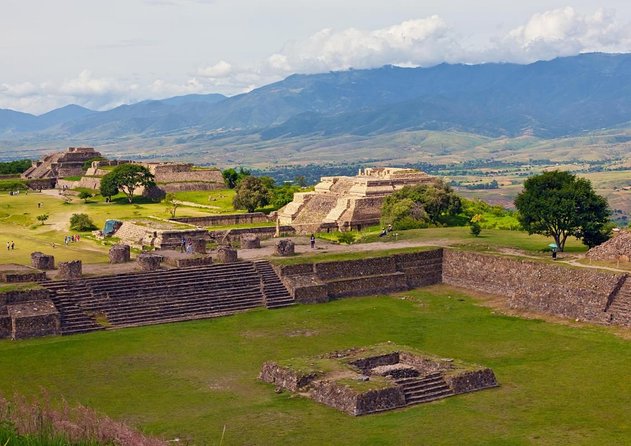
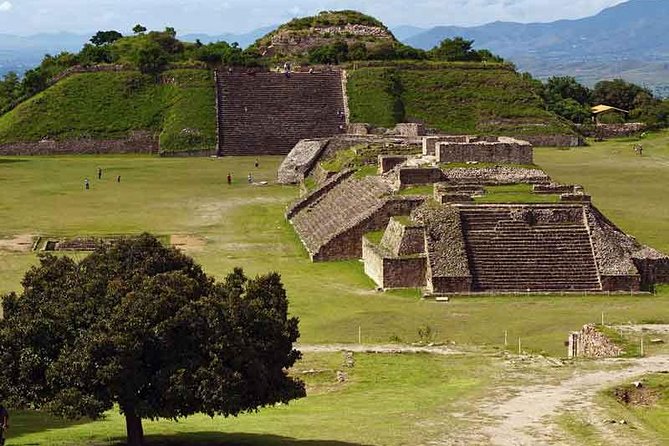
- Monte Albán opens the tour with Oaxaca’s major archaeological site, spread across a broad ceremonial plaza surrounded by temples, palaces, tombs, and ball courts.
- The two days cover culture rather than just ruins, with alebrijes in Arrazola, black pottery in San Bartolo de Coyotepec, wool weaving in Teotitlán del Valle, and mezcal in Rancho Zapata.
- A group of no more than 14 keeps the outing manageable, and downtown hotel pickup removes much of the transport planning.
- Hierve el Agua is a short stop, giving you time to walk around and take in the petrified waterfall formations, but not a long visit.
- Admission fees and meals are extra, so budget beyond the $218 tour price.
- The schedule is full, especially on Day 2, which combines the Tule Tree, Mitla, Hierve el Agua, and a mezcal tasting.
Why this two-day Oaxaca trip works well

At $218 per person, this is not the cheapest way to see Oaxaca’s sights. But the price covers two days of transport, hotel pickup, an air-conditioned vehicle, and a small-group format. You are paying for convenience as much as admission to the places themselves, since the listed archaeological and cultural stops have several fees that are not included.
I see the main value in the route. Oaxaca’s key sights are spread beyond the city, and arranging separate taxis or buses for Monte Albán, Mitla, Hierve el Agua, and the villages would take time and planning. Here, you can leave from your downtown hotel between 9:40 and 10:00 AM and let the operator handle the driving.
The group limit is 14 people. That is large enough to keep the cost below a private tour, but small enough that questions should be practical rather than lost in a crowd. One particularly positive experience came from a guide named Emeterio, who explained Monte Albán in English and Spanish and made time for questions. Guides can vary, but the tour is offered in English.
The tradeoff is pace. This is a sightseeing circuit, not a slow village stay. You will get an introduction to many places, but some stops are brief. Hierve el Agua receives about 45 minutes, and the Tule Tree about the same. If you want long hikes, extended shopping, or hours at each ruin, this schedule may feel tight.
More Mezcal Tours in Oaxaca
- Hierve el Agua, Tule Tree, Mitla and Mezcal Distillery Tour
★ 4.5 · 1,094 reviews - Explore Hierve el Agua, Mitla, Tule, Textile and Mezcal for a day
★ 5.0 · 1,043 reviews - Oaxaca: Tule, Mitla & Hierve el Agua, & Mezcal Tour
★ 4.7 · 456 reviews
Day 1: Monte Albán and Oaxaca’s craft villages
Monte Albán and the great ceremonial plaza
Monte Albán is the day’s main event and the strongest archaeological stop on the trip. The site sits above the Oaxaca Valley and is built around a large rectangular plaza, with temples, palaces, shrines, ball courts, and tombs arranged around it.
You have about two hours here. That gives you enough time to take in the main layout and hear how the site functioned, though it is not an all-day archaeological study. I would pay close attention to the guide at the start, since the scale can make the ruins hard to read without context.
Admission is not included. The most important practical warning is the possible entry wait. The tour information notes that queues may reach 1.5 hours during the stated health restrictions, with no restroom or restaurant available while you wait. Bring water and use facilities before arriving if conditions still apply.
Monte Albán works best for you if you enjoy seeing how a large ceremonial center fits together. The broad plaza gives the site a different feel from Mitla, where decorative wall patterns and enclosed spaces are the main attraction.
Arrazola and the world of alebrijes
After Monte Albán, the route continues to San Antonio Arrazola for about an hour. This village is known for small figures carved from copal wood, painted as imaginative animals and other creatures.
The stop offers a useful change of pace. Instead of looking at objects behind glass, you see the craft tradition in the place associated with it and have a chance to buy handmade pieces. The tour description calls the figures a fantastic zoology, and that is a good way to think of them: they are not ordinary animal carvings but fanciful forms shaped by local creativity.
Purchases are optional, of course. If you plan to buy an alebrije, use this stop to compare size, detail, and price rather than rushing into the first piece you see. The visit is about an hour, enough for a look around without turning the day into a shopping trip.
More Hierve el Agua and Mezcal Tours in Oaxaca:
- full day tour : Boil the water, Teotitlan, Mezcal, tule and Mitla
★ 4.5 · 229 reviews - Check out Hierve el Agua, Mitla, the Tule Tree, Rugs, and a Mezcal Distillery Tour
★ 4.9 · 222 reviews - Tour Monte Albán, Hierve el agua, Teotitlán Del Valle and Mezcal
★ 5.0 · 196 reviews - Ultimate Hierve el Agua Hike + Mezcal
★ 5.0 · 136 reviews
Cuilapam’s unfinished Dominican complex
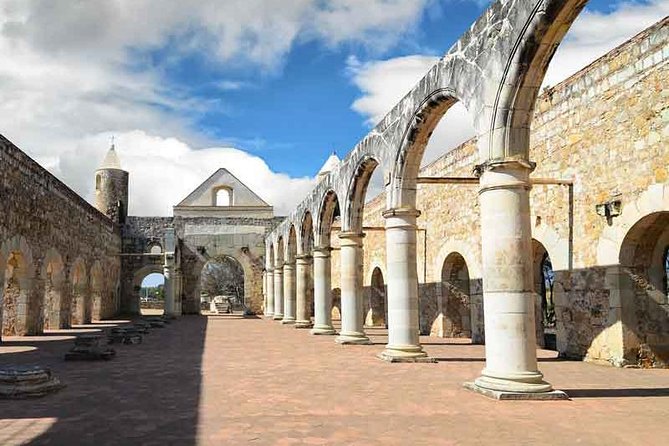
The next stop is Cuilapam de Guerrero, home to a 16th-century Dominican convent complex. You will see the open chapel, the unfinished basilica, and the former convent buildings during a visit of about 45 minutes.
The unfinished church is part of the appeal. It gives you a chance to see a major religious project that was never completed, while the open chapel adds a distinctive architectural feature. This is a compact stop, so expect an overview and time for photographs rather than a long architectural study.
Admission is not included. The information also warns that the ex-convent may be closed to tourism under certain conditions. If that happens, you can view the building from outside and take photographs. I would treat Cuilapam as a worthwhile bonus, but not the main reason to book the tour.
Doña Rosa Studio and black pottery
The final stop on Day 1 is San Bartolo de Coyotepec, where local artisans make black pottery. At Doña Rosa Studio, you watch a demonstration of the technique used to create the dark, polished pieces.
This is one of the tour’s better cultural stops because you see how the objects are made instead of only seeing finished goods. The visit lasts about 45 minutes and admission is free. You will also have the chance to purchase pottery if something catches your eye.
The crafts give Day 1 a useful balance. Monte Albán and Cuilapam focus on the past, while Arrazola and Coyotepec show traditions that continue in the present. I like that contrast, especially if you want more than a sequence of archaeological sites.
Day 2: Tule, weaving, Mitla, and mezcal
The ancient Tule Tree
Day 2 begins in Santa María el Tule, home to a giant sabino tree said to be approximately 2,000 years old. You have about 45 minutes at the stop.
The Tule Tree is a quick visit, but it is memorable for its sheer size and age. The tour information warns that access may be limited under certain conditions, in which case you may need to view it from 50 to 100 meters away. That matters because the experience depends on how close you can get.
Admission is not included. I would keep expectations realistic: this is a short stop to see an extraordinary natural feature, not a full morning in the community.
Teotitlán del Valle and natural-dyed wool
The tour then moves to Teotitlán del Valle, an artisan town known for wool rugs made on homemade looms. The visit lasts about 50 minutes, and admission is free.
The interesting detail is the use of natural dyes. The stop gives you a look at the relationship between raw materials, color, weaving, and finished design. If you are considering a purchase, this is a good place to ask about how the colors are produced and how the rugs are made.
As with Arrazola and Coyotepec, shopping is part of the setting but not compulsory. The short visit means you should not expect to compare every workshop or spend hours choosing a rug. I see it as a focused introduction to one of Oaxaca’s best-known textile traditions.
Mitla’s geometric stonework
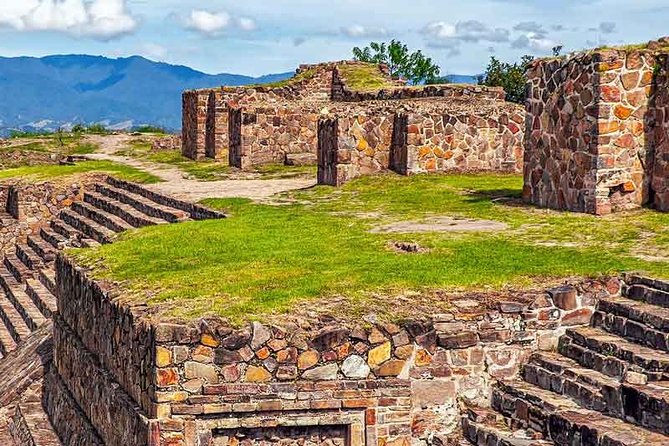
Mitla is the main archaeological stop on the second day. This was an important Zapotec ceremonial center, and its buildings are known for carefully arranged geometric frets on the walls.
You receive about 1.5 hours at the site. That is enough time to see the principal structures and study the wall decoration, which gives Mitla a character very different from Monte Albán. At Monte Albán, the broad plaza and monumental scale dominate. At Mitla, proportion, enclosed courtyards, and repeated stone patterns hold your attention.
Admission is not included. As at Monte Albán, the tour warns of possible waits of up to 1.5 hours, without a restroom or restaurant during the queue. This is a serious scheduling issue because Day 2 already contains several stops. Bring water and plan to be patient if access is restricted.
Mitla is especially good for you if architectural detail interests you more than wide views. The stone frets are the reason to linger, so listen closely when the guide explains what you are seeing. A guide such as Emeterio can make the difference between simply photographing a wall and understanding why its design matters.
Hierve el Agua and the petrified waterfall
Hierve el Agua follows Mitla. This ecotourist site is known for petrified waterfall formations and broad views across the surrounding area. The visit lasts about 45 minutes.
You will have time to walk around and take photographs, but the stop is short. Do not plan on a long hike or a leisurely afternoon here. The tour presents Hierve el Agua as a scenic viewpoint and natural formation within a busy day.
Admission is not included. Since the route has already taken you through several cultural stops, Hierve el Agua provides a welcome change from buildings and carved stone. I would save some energy for this visit, since the enjoyment comes from walking around and seeing the formations from different points.
Rancho Zapata and an introduction to mezcal
The final stop is Rancho Zapata, a mezcal factory where you can taste different types of Oaxaca’s signature spirit. The visit lasts about 45 minutes and is included in the tour.
You may try gusanito, mezcal served with agave worms, or reposado, an aged mezcal. This is a tasting and production stop, not simply a bar visit. You get a chance to connect the drink with the regional craft traditions seen earlier in the day.
If you do not drink alcohol, the tour details do not specify an alternative tasting, so you may want to check before booking. For those interested in Oaxaca’s food and drink culture, the stop is a fitting finish. Afterward, you return to Oaxaca City.
Transport, timing, and what to bring
Pickup is offered from hotels in downtown Oaxaca. If your hotel is not on the selection list, you can provide its name and address. If you have not booked accommodation yet, the operator will contact you before the tour date to confirm where you will stay.
The pickup window is 9:40 to 10:00 AM. That is convenient, but do not expect a precise minute. Keep your phone available and wait in the hotel lobby.
The air-conditioned vehicle matters on two full days outside the city. The group can reach 14 people, so the vehicle is shared rather than private. Public transportation is nearby, but you do not need to use it for the scheduled tour.
Meals are not included. The tour details do not specify meal stops, so I would bring water and a few snacks, especially because archaeological entry queues may lack a restaurant. Wear shoes suitable for walking and carry sun protection, since several stops involve outdoor sites.
The free-cancellation policy allows a full refund when you cancel at least 24 hours before the start time. Changes or cancellations made later are not accepted for a refund.
Who should book this Oaxaca tour
I would choose this experience if you have two days in Oaxaca and want a broad first look at the region without arranging separate transport. It suits you if you like archaeology, crafts, scenery, and regional food and drink in one package.
It is also a good match if you prefer a small group to a large coach. The maximum of 14 people and the included hotel transfer make the outing easier to manage, while the English-language format works well for international visitors.
I would think twice if you want a slow, flexible schedule. The route covers a lot, and some stops last less than an hour. Entry fees, meals, and possible waits also add cost and uncertainty. Families and most adults can participate, but anyone who dislikes long drives, queues, or a full schedule may prefer separate day trips.
Should you book it?
Book this tour if your priority is efficient coverage. Monte Albán, Mitla, Hierve el Agua, the Tule Tree, three craft communities, and a mezcal factory would be difficult to combine without private transport. The cultural variety is the strongest reason to go, and the small group helps keep the experience personal.
At $218, the value depends on how much you would otherwise spend on transport and planning. Add money for admissions, food, and purchases. If you accept the busy pace and prepare for possible archaeological site waits, this is a useful two-day introduction to Oaxaca beyond the city center.
FAQ

How long is the tour?
The experience lasts approximately two days.
What time is hotel pickup?
Pickup from a downtown Oaxaca hotel is scheduled between 9:40 and 10:00 AM.
Is hotel pickup included?
Yes. Pickup is offered from hotels in downtown Oaxaca. If your hotel is not listed, you can provide its name and address.
How large is the group?
The tour has a maximum of 14 people.
Is the tour offered in English?
Yes. The tour is offered in English.
Are meals included?
No. Meals are not included in the tour price.
Are entrance fees included?
No. Admission is not included for Monte Albán, Cuilapam, the Tule Tree, Mitla, or Hierve el Agua. Entry is listed as free for Arrazola, Teotitlán del Valle, Doña Rosa Studio, and Rancho Zapata.
Can I cancel for a full refund?
Yes, if you cancel at least 24 hours before the experience start time. Cancellations or changes made less than 24 hours before the start time are not eligible for a refund.
More Two-Day Trips in Oaxaca
- 2-Day Guadalajara, Tequila, and Tlaquepaque from Puerto Vallarta
★ 3.0 · 2 reviews
Just added around Oaxaca
- Monte Albán, Hierve el Agua, Mezcal distillery & Teotitlán rugs★ 5.0 · 7 reviews
- Private Lunch in Mezcal Maguey Fields★ 5.0 · 2 reviews
- Hierve el Agua, Mitla, Tule, Teotilán and Mezcal factory★ 3.5 · 2 reviews
- Private Tour, all inclusive: Tlacochahuaya, Mezcal, Teotitlán del Valle★ 5.0 · 3 reviews
- The Mezcal Tour★ 5.0 · 6 reviews
- Tasting of Organic Mezcales★ 5.0 · 6 reviews
- Real Mezcal Adventure★ 4.0 · 11 reviews
- Tour of Mezcalerias in the City★ 4.0 · 4 reviews
Hierve el Agua and Mezcal Tours, compared.
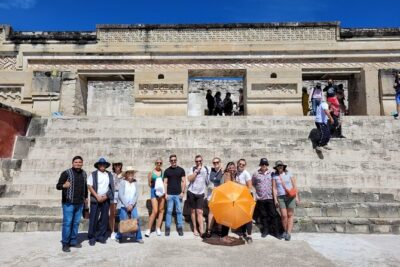
Hierve el Agua, Tule Tree, Mitla and Mezcal Distillery Tour
Read our review →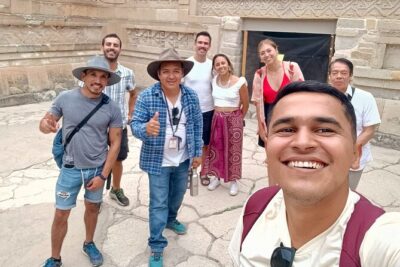
Explore Hierve el Agua, Mitla, Tule, Textile and Mezcal for a day
Read our review →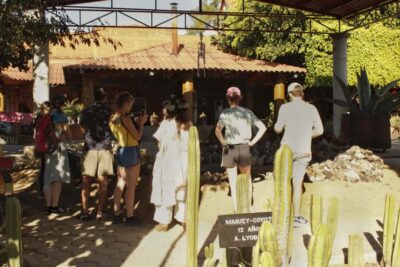
From Oaxaca de Juarez: Hierve el Agua and Mezcal Distillery
Read our review →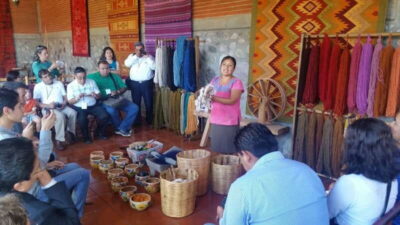
Oaxaca: Tule, Mitla & Hierve el Agua, & Mezcal Tour
Read our review →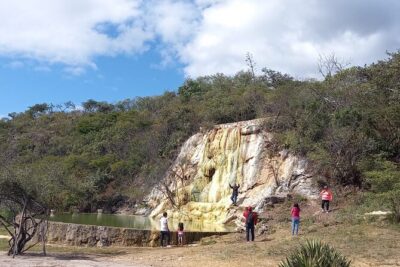
full day tour : Boil the water, Teotitlan, Mezcal, tule and Mitla
Read our review →
Check out Hierve el Agua, Mitla, the Tule Tree, Rugs, and a Mezcal Distillery Tour
Read our review →
Tour Monte Albán, Hierve el agua, Teotitlán Del Valle and Mezcal
Read our review →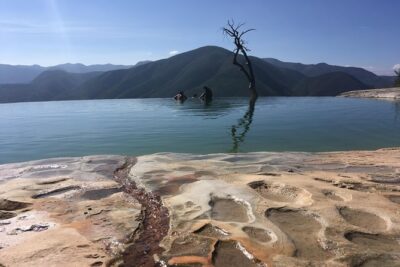
Browse the lists this tour appears in